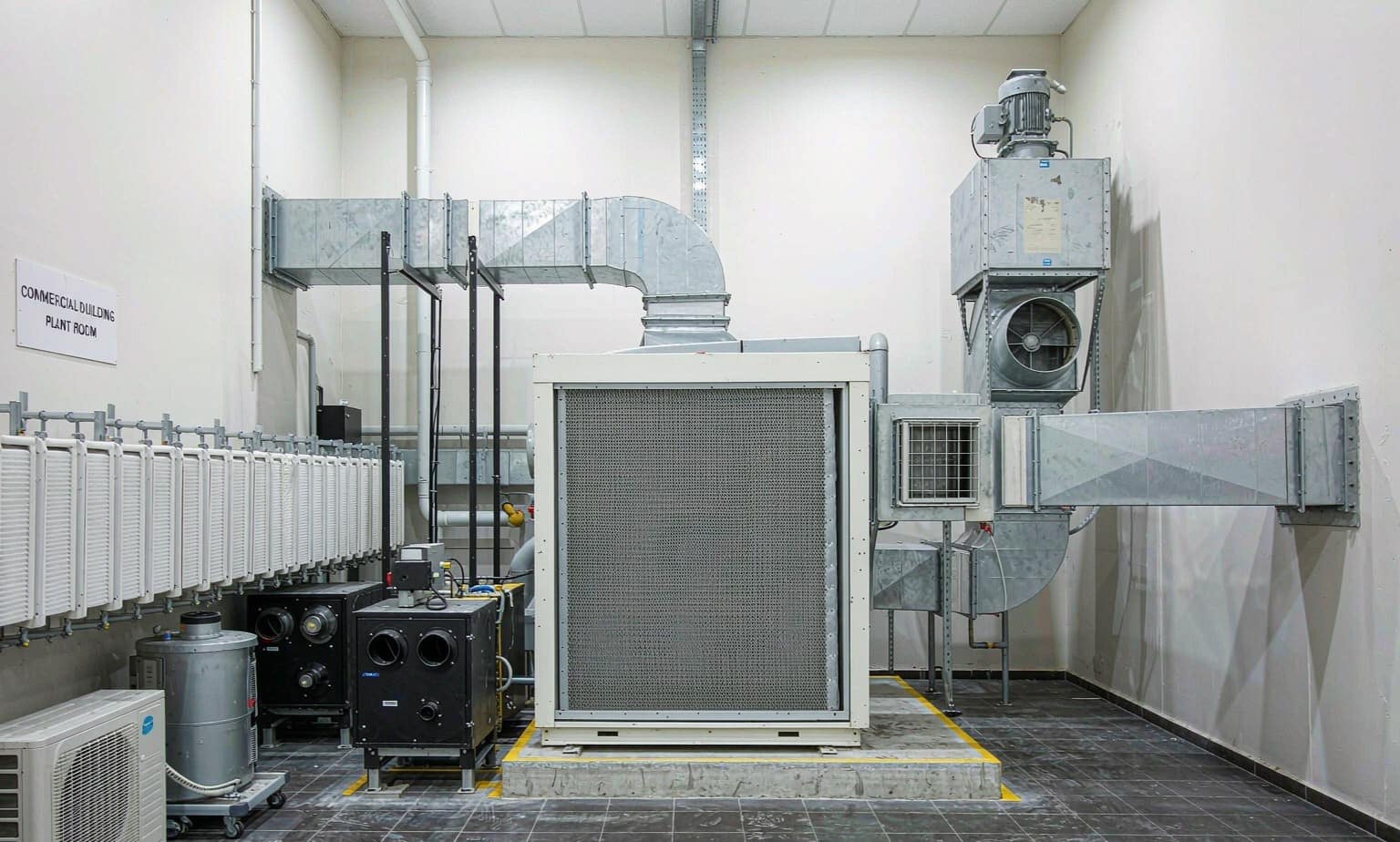
Ventilation without the energy penalty
Modern commercial buildings bring in large volumes of outdoor air for indoor air quality, but heating or cooling that air is a major load. Air-to-air heat recovery vents stale air while transferring its energy to the incoming fresh air, satisfying ventilation codes without a large heating or cooling penalty.
Suitable exchanger types and how they work
Plate heat-recovery ventilators recover sensible heat only; energy-recovery ventilators (ERVs) add a desiccant or membrane layer to also transfer moisture. Rotary enthalpy wheels recover both and suit humid climates. Our deep selection guide compares them in detail.
Design considerations for buildings
Size the recovery device to the outdoor-air fraction, not total airflow, to maximize payback. Provide a summer bypass, manage condensate and defrost in cold climates, and respect ASHRAE 62.1 ventilation rates. Choose the core material for the building’s air quality and maintenance expectations.
Typical Application Environments
Heat recovery is valuable wherever a building or process expels warm, stale air while drawing in cold or hot fresh air. Common sites include factory make-up air systems, commercial kitchens, paint booths, drying rooms, laboratories, and cleanrooms. In each case the exhausted air still holds usable thermal energy, and capturing it reduces the heating or cooling demand placed on the primary plant.
Matching the Unit to the Duty
The right selection starts with the air volume, the temperature difference between streams, and the cleanliness of the exhaust. Clean, steady flows suit plate exchangers; humid or dusty exhaust may need a rotary wheel with purge or a unit arranged for easy wash-down. Pressure drop must stay within the fan curve, and the core material must resist any contaminants present in the airstream.
Integration Tips
For the Air-to-Air Heat Recovery for Fresh-Air (HRV/ERV) Systems duty, position the exchanger so the exhaust is filtered before it reaches the core, and provide condensate drainage where the supply side may drop below the dew point. Balanced supply and exhaust fans keep the building neutral in pressure, which protects indoor air quality and process control. A bypass damper lets the system free-cool in mild weather.
Frequently Asked Questions
Can it handle greasy kitchen air? Yes, with a rotary wheel and a wash cycle, though the exhaust should first pass a grease filter. Will it cause condensation? Some condensate is normal in winter; provide a drain or a defrost strategy on the supply side.


