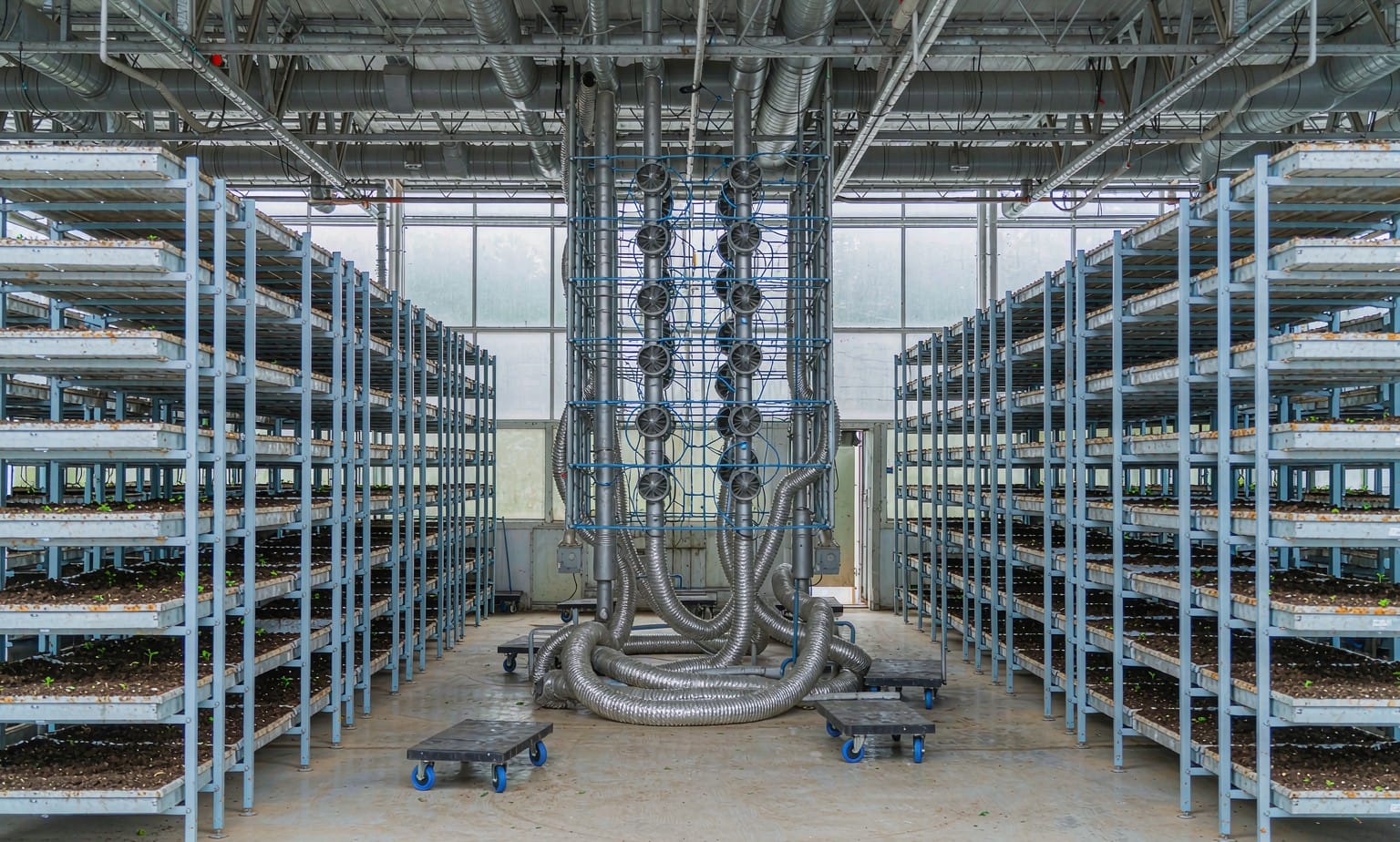
Wasted heat in protected agriculture
Greenhouses and indoor agriculture facilities vent warm, humid air to control temperature and CO2, especially in cold weather. That vented air carries substantial energy; recovering it preheats the incoming fresh air, reducing heating cost and avoiding cold drafts that stress plants.
Suitable exchanger types and how they work
Plate air-to-air exchangers recover heat between exhaust and supply with no mixing, protecting crop air quality. An enthalpy core can also move moisture, useful in dry-climate greenhouses. Our greenhouse heat-recovery guide covers crop-specific points.
Design considerations for agriculture
Greenhouse air is humid and can carry pesticides or salt from irrigation; choose washable, corrosion-resistant plates and provide condensate drainage. Size to the ventilation rate, add a summer bypass, and keep pressure drop within the existing fan capacity so the recovery does not fight the climate system.
Typical Application Environments
Heat recovery is valuable wherever a building or process expels warm, stale air while drawing in cold or hot fresh air. Common sites include factory make-up air systems, commercial kitchens, paint booths, drying rooms, laboratories, and cleanrooms. In each case the exhausted air still holds usable thermal energy, and capturing it reduces the heating or cooling demand placed on the primary plant.
Matching the Unit to the Duty
The right selection starts with the air volume, the temperature difference between streams, and the cleanliness of the exhaust. Clean, steady flows suit plate exchangers; humid or dusty exhaust may need a rotary wheel with purge or a unit arranged for easy wash-down. Pressure drop must stay within the fan curve, and the core material must resist any contaminants present in the airstream.
Integration Tips
For the Heat Recovery for Greenhouses and Agriculture duty, position the exchanger so the exhaust is filtered before it reaches the core, and provide condensate drainage where the supply side may drop below the dew point. Balanced supply and exhaust fans keep the building neutral in pressure, which protects indoor air quality and process control. A bypass damper lets the system free-cool in mild weather.
Frequently Asked Questions
Can it handle greasy kitchen air? Yes, with a rotary wheel and a wash cycle, though the exhaust should first pass a grease filter. Will it cause condensation? Some condensate is normal in winter; provide a drain or a defrost strategy on the supply side.
Practical Selection Checklist
For the Heat Recovery for Greenhouses and Agriculture duty, confirm the measured airflow and the temperature difference between the two airstreams before specifying any unit. Choose the core type that matches the exhaust cleanliness and the recovery target, allow margin for fouling, and verify the pressure drop stays inside the fan curve. Place filtration ahead of the core and provide a condensate drain where the supply side may fall below the dew point.
When to Specify This Solution
Energy recovery suits any plant or building that expels warm exhaust continuously while drawing in fresh air that must be conditioned from ambient. Common candidates include make-up air units, drying rooms, commercial kitchens, paint booths, and general process ventilation. Where the annual cost of heating or cooling make-up air is material, a correctly sized exchanger usually pays back within one to three operating seasons.
Next Steps
Start by logging the supply and exhaust conditions for a full duty cycle, then size the core from those numbers rather than from nameplate estimates. Compare the projected energy saving with the equipment and installation cost to get a payback figure, and review the comparison and product guides for the specific configuration that fits your site.