How Frost Starts
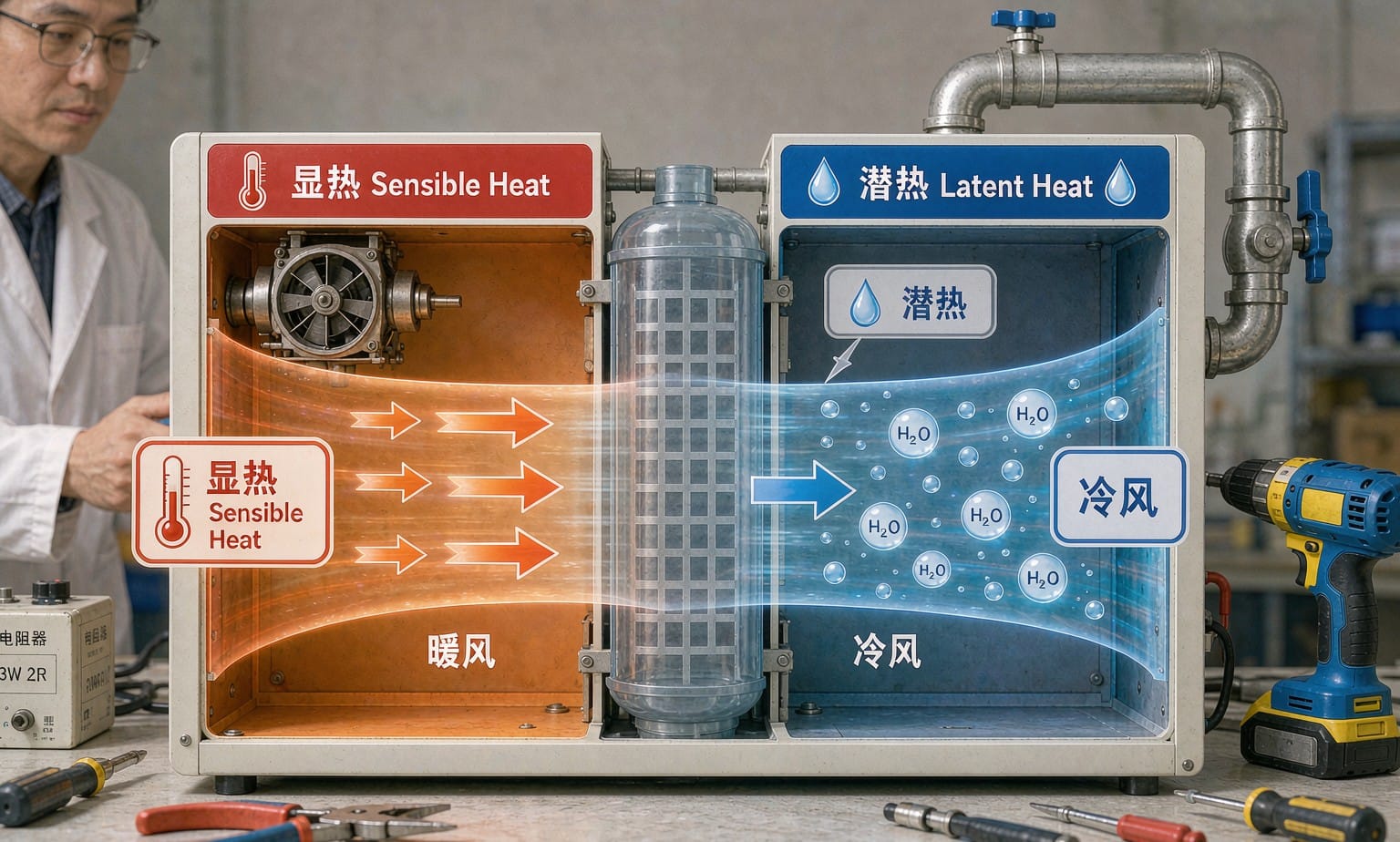
Frost forms when the exhaust-air temperature at the core surface drops below 0 C while the air still holds moisture. The vapour deposits as ice rather than liquid.
The Driving Conditions
- Cold outdoor intake (large DeltaT to warm exhaust)
- Moisture in the exhaust (high humidity ratio)
- Core surface below the frost point
Why It Grows
Once ice forms, it narrows channels, raises velocity and pressure drop, and insulates the surface, accelerating buildup. Left alone it blocks the core.
Prevention in Principle
Keep the exhaust above freezing by preheating intake, purging with warm air, or recirculating return air. The setpoint must follow the coldest real temperature, not the average.
Core Principle
The Frost Formation Physics topic rests on a simple idea: heat moves from the warmer stream to the cooler one whenever they are separated by a thin conductive wall. An air-to-air heat exchanger multiplies that wall area with many close channels, so a large surface fits in a small box. The closer the channels and the greater the area, the more energy transfers per pass.
Key Parameters
Recovery effectiveness is the ratio of actual temperature change to the maximum possible change. Pressure drop sets the fan energy needed to push air through the core. Counter-flow arrangement beats cross-flow for effectiveness, and plate spacing trades pressure drop against surface area. Material choice sets the temperature limit and corrosion resistance. Together these define real-world performance, not just the catalogue number.
Common Misconceptions
One myth is that higher effectiveness is always worth more money; in practice the curve flattens and the last few percent cost the most. Another is that exhaust and supply air mix; a well-built core keeps them separate. A third is that recovery only matters in winter; in cooled buildings it also cuts compressor load by pre-tempering incoming air.
Frequently Asked Questions
What is effectiveness? It is the share of the maximum possible temperature change that the exchanger actually delivers. Does recovery help in summer? Yes, by reducing the cooling load on incoming ventilation air.
Practical Selection Checklist
For the Frost Formation Physics duty, confirm the measured airflow and the temperature difference between the two airstreams before specifying any unit. Choose the core type that matches the exhaust cleanliness and the recovery target, allow margin for fouling, and verify the pressure drop stays inside the fan curve. Place filtration ahead of the core and provide a condensate drain where the supply side may fall below the dew point.
When to Specify This Solution
Energy recovery suits any plant or building that expels warm exhaust continuously while drawing in fresh air that must be conditioned from ambient. Common candidates include make-up air units, drying rooms, commercial kitchens, paint booths, and general process ventilation. Where the annual cost of heating or cooling make-up air is material, a correctly sized exchanger usually pays back within one to three operating seasons.
Next Steps
Start by logging the supply and exhaust conditions for a full duty cycle, then size the core from those numbers rather than from nameplate estimates. Compare the projected energy saving with the equipment and installation cost to get a payback figure, and review the comparison and product guides for the specific configuration that fits your site.