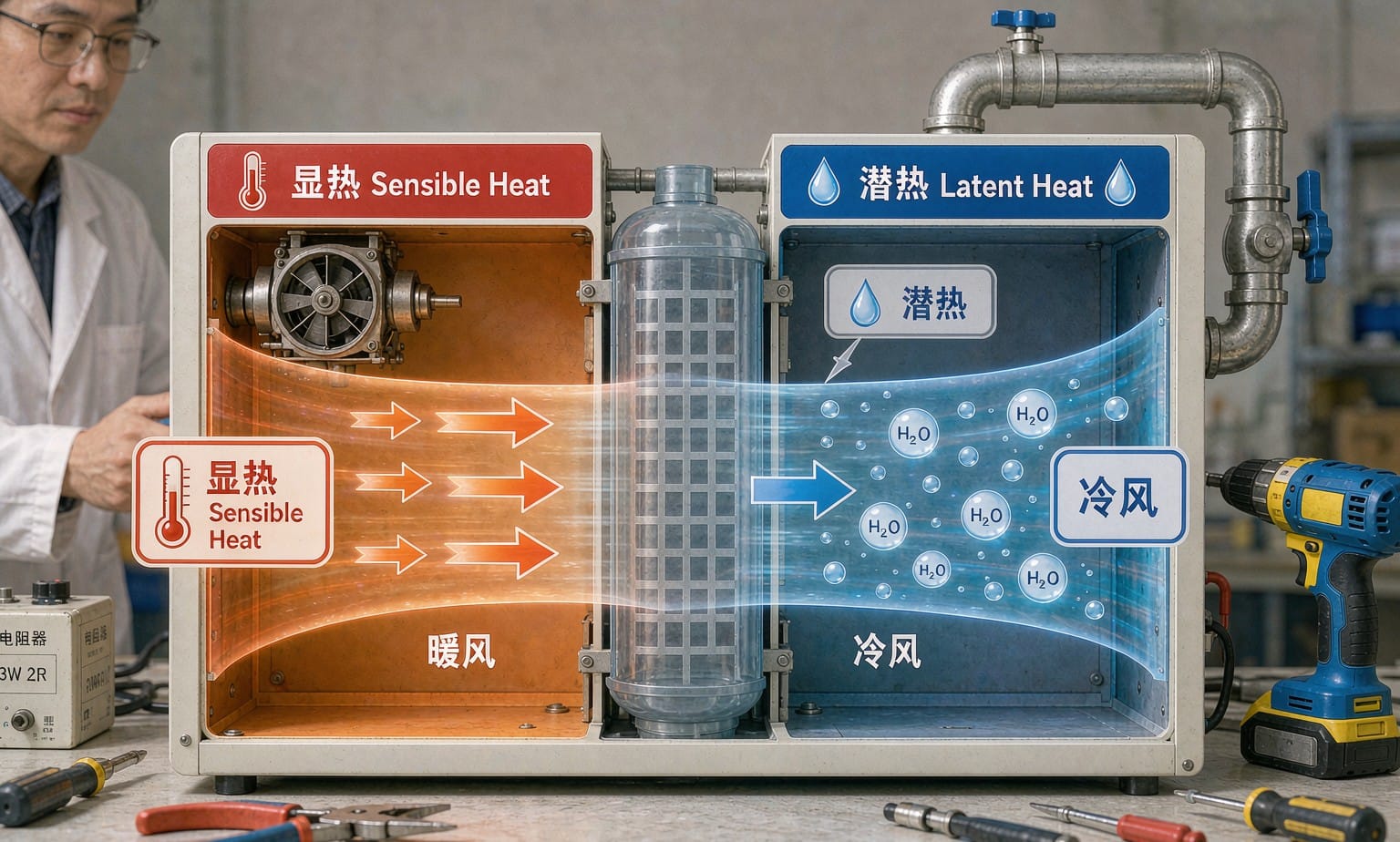
Two Loads, Two Numbers
In HVAC, the cooling or heating load splits into sensible (temperature) and latent (moisture). A coil or exchanger handles them differently.
Sensible Load
Q_sensible = m_dot x cp x DeltaT. This is the energy to change air temperature. It is what a sensible plate core recovers.
Latent Load
Q_latent = m_dot x h_fg x DeltaW, where h_fg is the heat of vaporisation and DeltaW is the humidity-ratio change. This is the energy to remove or add moisture.
Why the Split Drives Recovery Choice
If latent load is small, sensible recovery suffices. If it is large (humid climate), enthalpy recovery is needed to avoid dumping the moisture onto the cooling coil.
How the Two Approaches Differ
When evaluating options for Sensible vs Latent Heat in HVAC, the main differences are recovery efficiency, first cost, footprint, and how the air streams are handled. A plate exchanger keeps the streams fully separate and is simple, while a rotary wheel can reach higher recovery but allows a small carryover of moisture and a trace of exhaust into the supply. Air-to-water systems shift energy into a water loop instead of directly into the supply air, which suits buildings with a hydronic heating or cooling network.
Efficiency and Cost
Plate units typically recover 50 to 65 percent of sensible heat at modest cost and with low maintenance. Rotary wheels reach 70 to 85 percent including latent recovery, at a higher price and with moving parts. Air-to-water versions trade some efficiency for flexibility in where the energy is used. The best value depends on energy prices, run hours, and whether humidity control is part of the requirement.
Which to Choose
Choose a plate exchanger for clean, cost-sensitive duties; a rotary wheel when maximum recovery or latent heat matters; and an air-to-water system when the recovered energy must serve another loop. Always size from measured airflow and temperature data rather than nameplate guesses, because oversizing wastes money and undersizing limits savings.
Frequently Asked Questions
Is higher recovery always better? Not always; beyond a point the extra cost outweighs the marginal energy saved. Do rotating parts need service? Yes, the wheel seal and drive should be checked periodically.
Practical Selection Checklist
For the Sensible vs Latent Heat in HVAC duty, confirm the measured airflow and the temperature difference between the two airstreams before specifying any unit. Choose the core type that matches the exhaust cleanliness and the recovery target, allow margin for fouling, and verify the pressure drop stays inside the fan curve. Place filtration ahead of the core and provide a condensate drain where the supply side may fall below the dew point.
When to Specify This Solution
Energy recovery suits any plant or building that expels warm exhaust continuously while drawing in fresh air that must be conditioned from ambient. Common candidates include make-up air units, drying rooms, commercial kitchens, paint booths, and general process ventilation. Where the annual cost of heating or cooling make-up air is material, a correctly sized exchanger usually pays back within one to three operating seasons.
Next Steps
Start by logging the supply and exhaust conditions for a full duty cycle, then size the core from those numbers rather than from nameplate estimates. Compare the projected energy saving with the equipment and installation cost to get a payback figure, and review the comparison and product guides for the specific configuration that fits your site.


