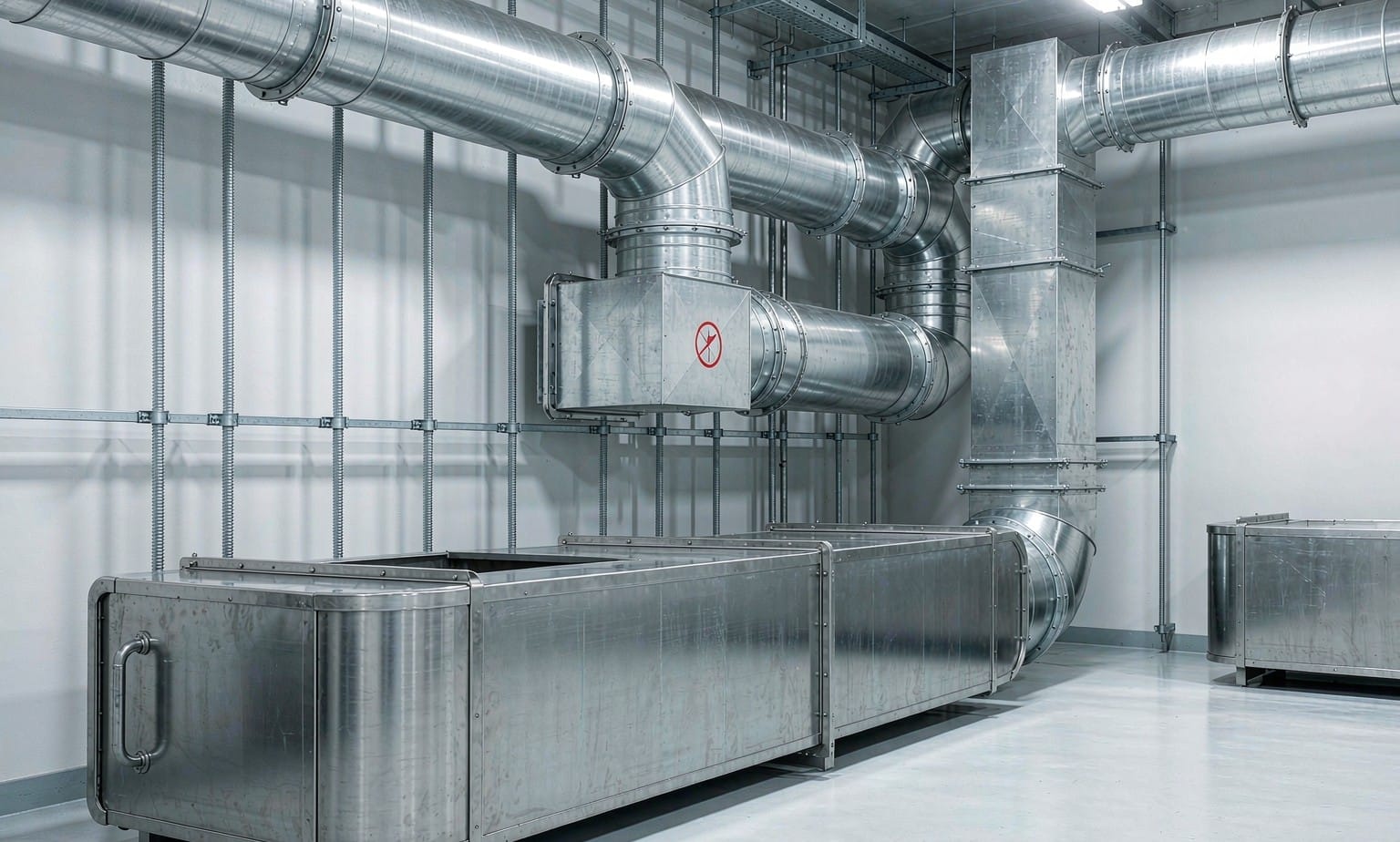
Air-to-Air Heat Exchangers & Heat Recovery · Since 2005

Heat Recovery and Building Decarbonization

The Carbon Logic

Most building operational carbon comes from heating and cooling. Recovery cuts the energy needed for both, so it reduces emissions directly and cheaply.

Compounding Benefits

  • Smaller plant - less heating and cooling capacity needed
  • Lower peak demand - eased grid pressure
  • Enables heat pumps to run at higher, more efficient temperatures

Policy Tailwinds

Energy-performance standards and carbon pricing both reward recovered energy, improving the business case for every project.

Practical Takeaway

For a decarbonization roadmap, recovery is usually the first, fastest-payback step - before you even size the heat pump or the PV array.

Frost Formation in Air-to-Air Exchangers

How Frost Forms

In cold weather the warm exhaust air cools as it gives up heat. If its dewpoint is above 0 C, water condenses; if the surface drops below 0 C, that condensate freezes into frost on the exhaust side.

Why It Matters

Frost narrows the channels, raises pressure drop, and eventually blocks the core, collapsing effectiveness and stressing the fan.

Mitigation Methods

  • Timed bypass or recirculation defrost
  • Preheat of incoming air
  • Frost-resistant core geometry

Design Note

Set the defrost strategy from the coldest expected outdoor temperature, not the annual average, or the core will ice up during the worst week of the year.

Understanding Heat Exchanger Effectiveness Ratings

Three Ratings

  • Sensible effectiveness - temperature recovery only.
  • Latent effectiveness - moisture recovery only.
  • Total (enthalpy) effectiveness - both combined.

Why the Test Point Matters

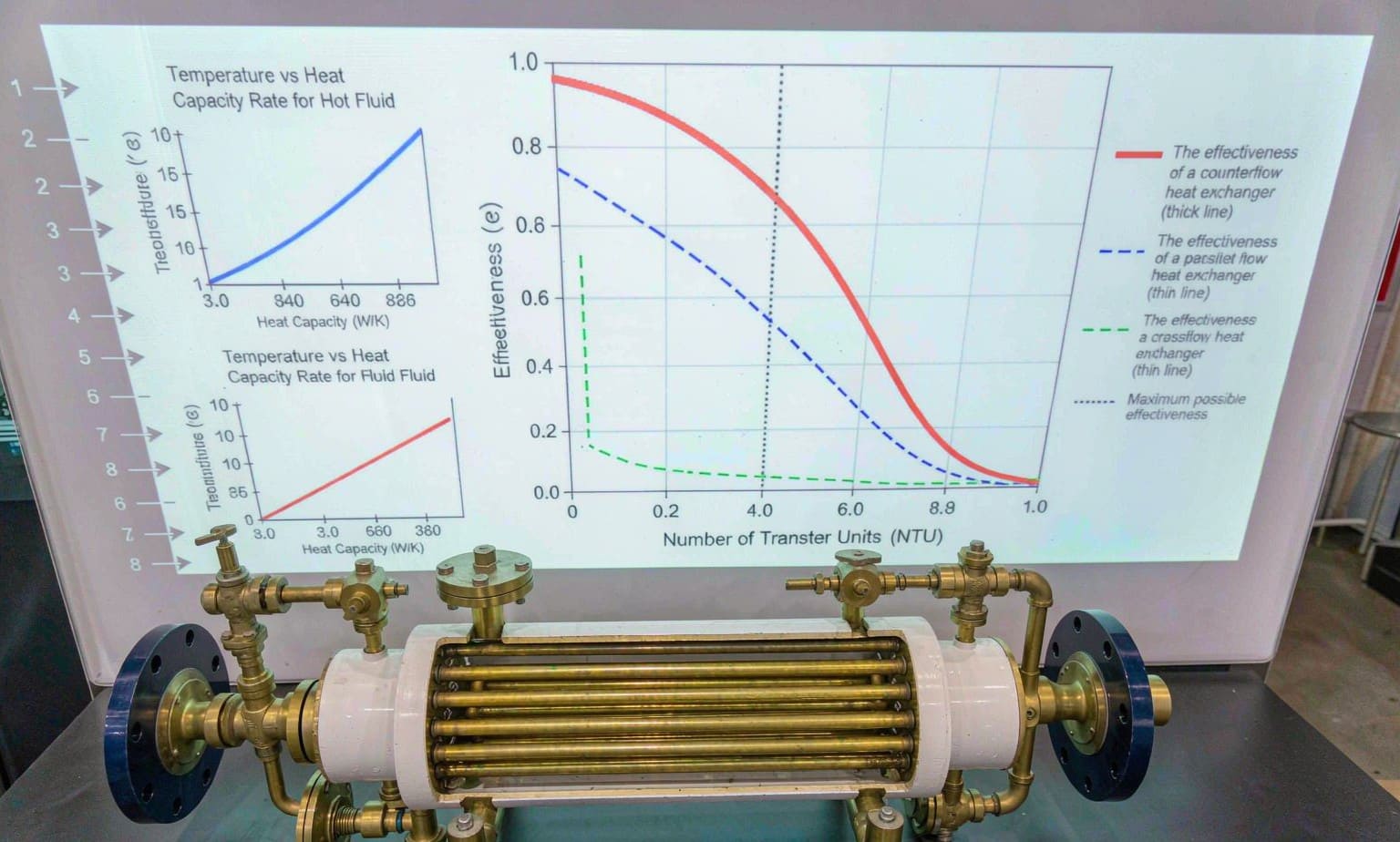
Effectiveness is not constant. It falls as face velocity rises and shifts with the temperature difference. A single headline number is only true at one operating point.

Reading the Curve

A credible rating shows effectiveness across several airflows. Use the point closest to your real duty, not the best-case marketing figure.

Standards

EN 308 and AHRI 1060 define how these numbers are measured so different products can be compared fairly.

The Role of Heat Recovery in Modern HVAC

From Luxury to Baseline

Ventilation is essential for health, but it constantly brings in untreated outside air. Without recovery, that air must be heated or cooled from scratch every hour. Recovery turns that waste stream back into a resource.

Where It Fits

  • New buildings aiming for low-energy or net-zero targets
  • Retrofits of older constant-volume systems
  • Any space with high, continuous ventilation (schools, offices, data centers)

Standards Push Adoption

Building codes and standards such as EN 16798 and ASHRAE 90.1 now set recovery thresholds by climate, making it the default rather than the exception.

The Payoff

Recovery typically removes 50 to 80 percent of the ventilation load, cutting both energy bills and carbon footprint without changing how the building feels to occupants.

Warranty and After-Sales Service

Coverage

Equipment is covered against manufacturing defects for the period stated in the order confirmation. Consumables and normal wear are excluded.

Filing a Claim

  • Provide the serial number from the nameplate
  • Describe the symptom and operating context
  • Include photos or logged data where relevant

What Happens Next

We assess within three business days and, where covered, ship a replacement or the needed parts. For critical systems we prioritise a fast turnaround.

Extending Life

Follow the maintenance schedule and keep filters clean; most field failures trace back to fouling or wrong operating conditions rather than the core itself.

Technical Documentation & Downloads

What Is Available

  • Product datasheets with performance curves
  • EN 308 / AHRI 1060 test reports
  • Installation and commissioning manuals
  • CAD drawings and BIM where offered
  • Spare-parts lists

How to Request

Quote the model or project reference. Datasheets are non-sensitive and sent immediately; test reports are released against a project enquiry.

For Specifiers

Ask for the submittal package: performance data, dimensions, weights, and electrical loads, formatted for inclusion in a specification.

Find a Local Distributor

Why a Distributor

Local partners shorten lead times, handle logistics, and provide on-site commissioning and service in your language and time zone.

How to Find One

  • Send your country and nearest city
  • We return the assigned distributor and contact
  • For project work, we can introduce a specialist integrator

If There Is No Local Partner

We ship direct from the factory with remote engineering support, and we can recommend an independent commissioning agent near you.

Our Support Channels

Engineering Support

Our application engineers help with selection, sizing, and integration questions. Reach them by email with your project reference so we can pull the right files.

Documentation

Datasheets, test reports, and installation manuals are available on request. Reference the model number and we will send the matching package.

After-Sales

For warranty or service, include the serial number (printed on the nameplate) and a description of the symptom. This lets us trace the build and advise a fix fast.

Response Times

  • Quotation follow-up: within two business days
  • Technical question: within one business day
  • Warranty claim: assessed within three business days

How to Request a Quote

Before You Ask

A good quote starts with a clear duty. Gather the basics before contacting us so we can respond with a real number, not a range.

Information We Need

  • Supply and exhaust airflow (m3/h or cfm)
  • Outdoor winter and summer design temperatures
  • Indoor setpoint and allowable supply-air temperature
  • Space available and any duct constraints

What You Receive

We return an effectiveness estimate, a pressure-drop figure, a suggested technology (plate, rotary, or heat pipe), and a budget price with lead time.

Get Started

Email the details above to our team and reference the application. For a complex project, ask for a call so we can review the drawings together.

Can I Add Heat Recovery to an Existing System?

Usually, Yes

Most central air-handling units can be retrofitted. A plate core often slots into the AHU section with minimal ductwork changes; a rotary wheel needs space for the wheel and its drive.

What to Check First

  • Physical space in or beside the AHU
  • Balanced supply and exhaust airflow
  • Available fan capacity for the extra pressure drop
  • Controls to manage frost protection if needed

Retrofit Tips

Start with a crossflow plate core for simplicity. Verify the fan can handle the added static pressure before committing, and model the savings at your actual operating hours.

Payback

Retrofits in continuously ventilated buildings often pay back within a few seasons because the duty runs year round.

Request a Quote
Need Help?